

Christopher Damman, Associate Professor of Gastroenterology, School of Medicine, University of Washington. Editor-in-Chief of Gut Bites MD.
For decades, nutrition and medicine have excelled at identifying what is missing when something goes wrong, guided in part by frameworks like Koch’s postulates and, in nutrition, by Casimir Funk’s early insight that specific diseases could be traced to missing nutrients. A single pathogen causes infection. A single deficiency causes disease.
This reductionist approach has been powerful. It gave us antibiotics, vitamins, and life-saving treatments. But it also shaped how we look for problems: one cause, one effect.
The microbiome does not work that way. It is not a single organism. It is a system, as understood in systems biology, and systems are harder to see, especially when they are buffered by redundancy.
The Invisible Safety Net
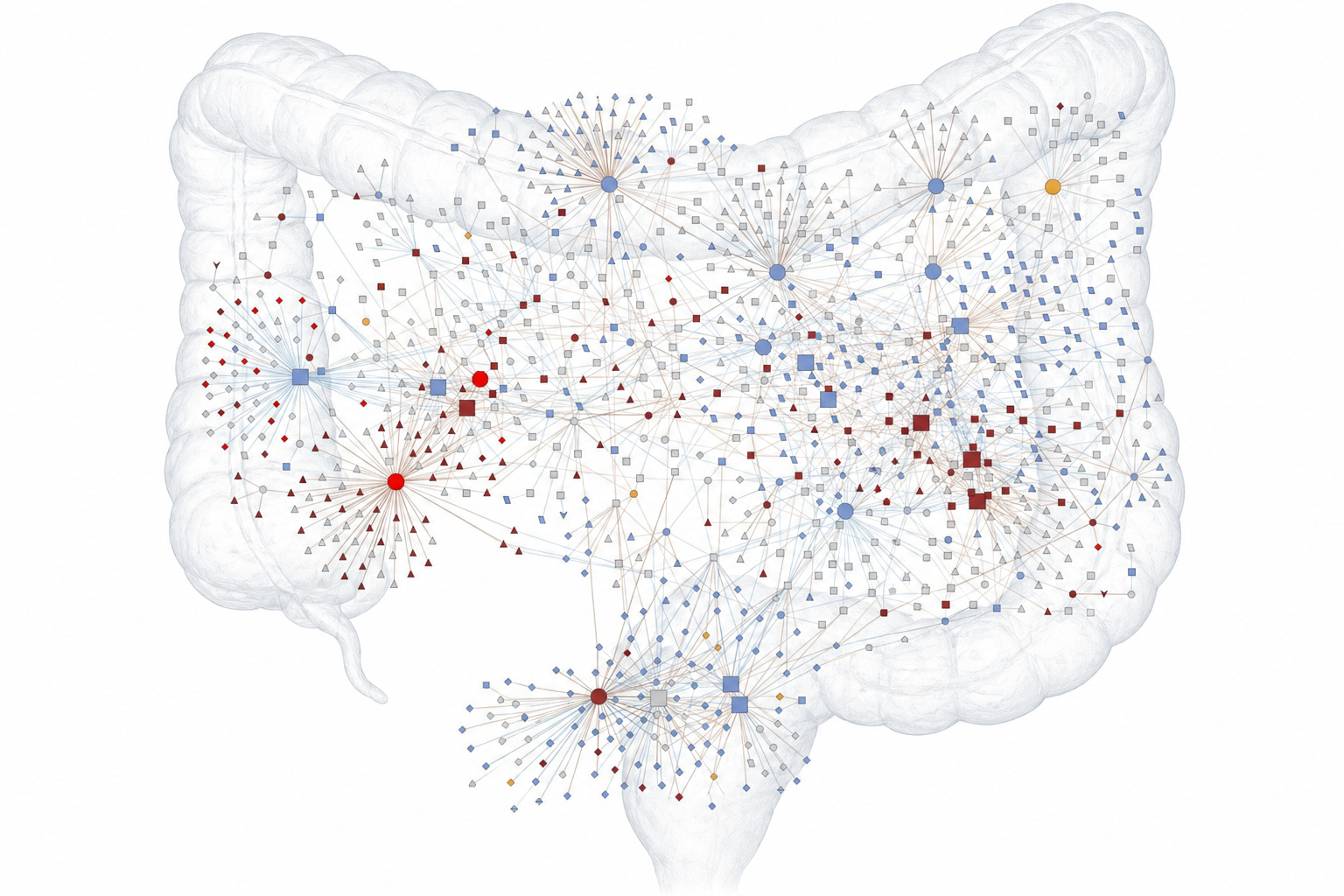
For most of human history, the gut microbiome was remarkably resilient. Diets were naturally rich in fiber and polyphenols, and diverse plant foods continuously fed microbial communities.
If one pathway faltered, another could compensate. If one species declined, others could fill the gap. This redundancy acted like a biological safety net.
Even when diets varied or stressors appeared, the system held. Because of that, there was no obvious deficiency disease for low fiber or low polyphenols, and no single microbe to point to and blame.
So we missed it. Not because it was unimportant, but because it was protected.
Why Fiber and Polyphenols Stayed in the Background
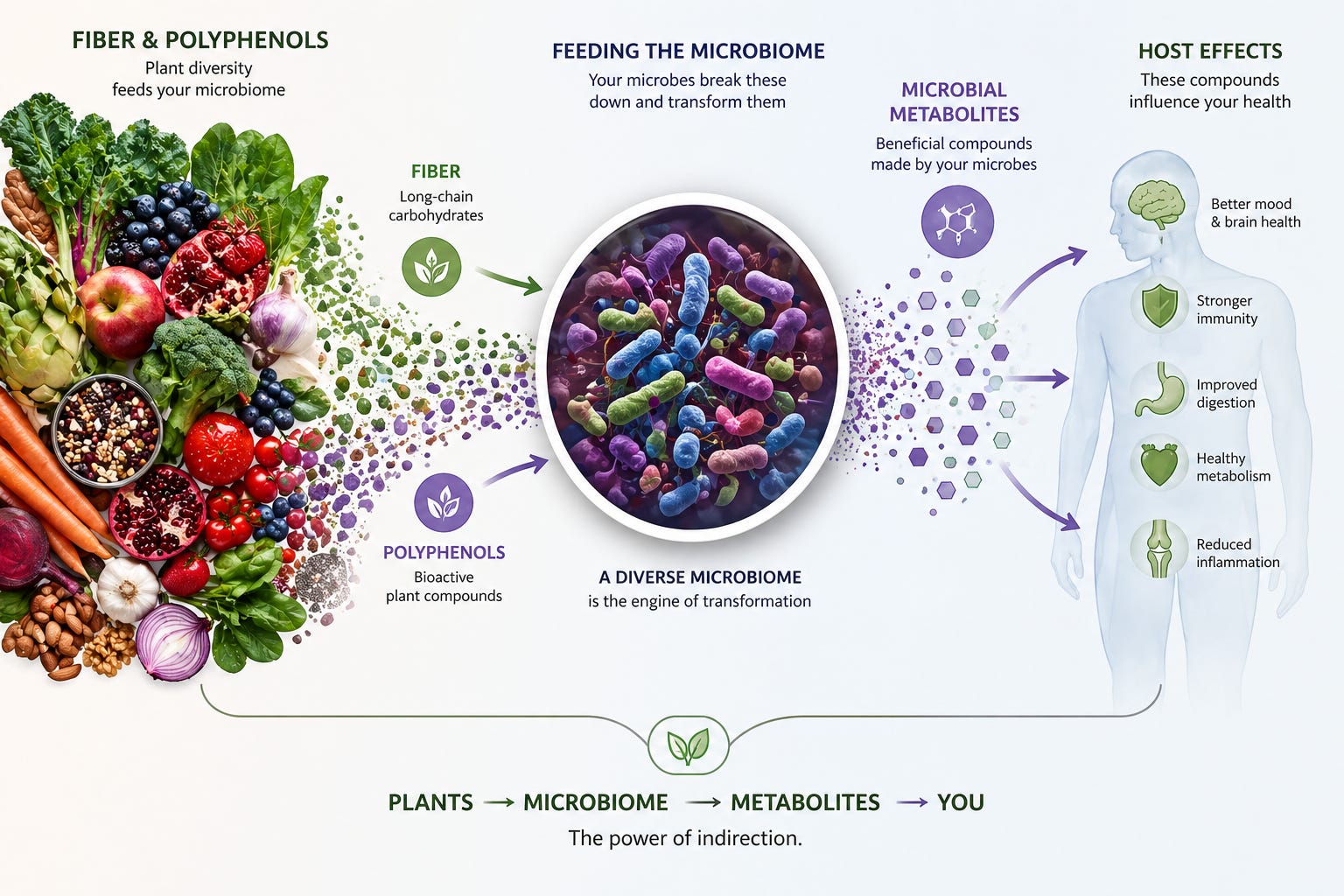
Fiber and polyphenols do not act like traditional nutrients. They are not primarily absorbed to nourish us directly, but instead nourish our microbes, which generate metabolites that regulate inflammation, metabolism, and immunity.
Their effects are indirect, distributed, and context-dependent. That makes them difficult to study using frameworks designed for single nutrients and single outcomes.
So while we measured vitamins, minerals and macronutrients with increasing precision, the compounds that fed the system itself remained in the background.
When Redundancy Breaks

What was once a strength is now becoming a vulnerability. The modern environment is applying multiple, simultaneous pressures on the microbiome, including diets low in fiber and polyphenols, increasing reliance on ultra-processed foods, widespread antibiotic exposure, changes in birth practices, and reduced environmental microbial diversity.
Each of these alone might be manageable. Together, they are not.
Redundant pathways begin to disappear, functional overlap shrinks, and the system becomes less flexible, less stable, and more prone to dysfunction. This is what system failure looks like, not a sudden collapse, but a gradual loss of resilience.
The One-Two Punch
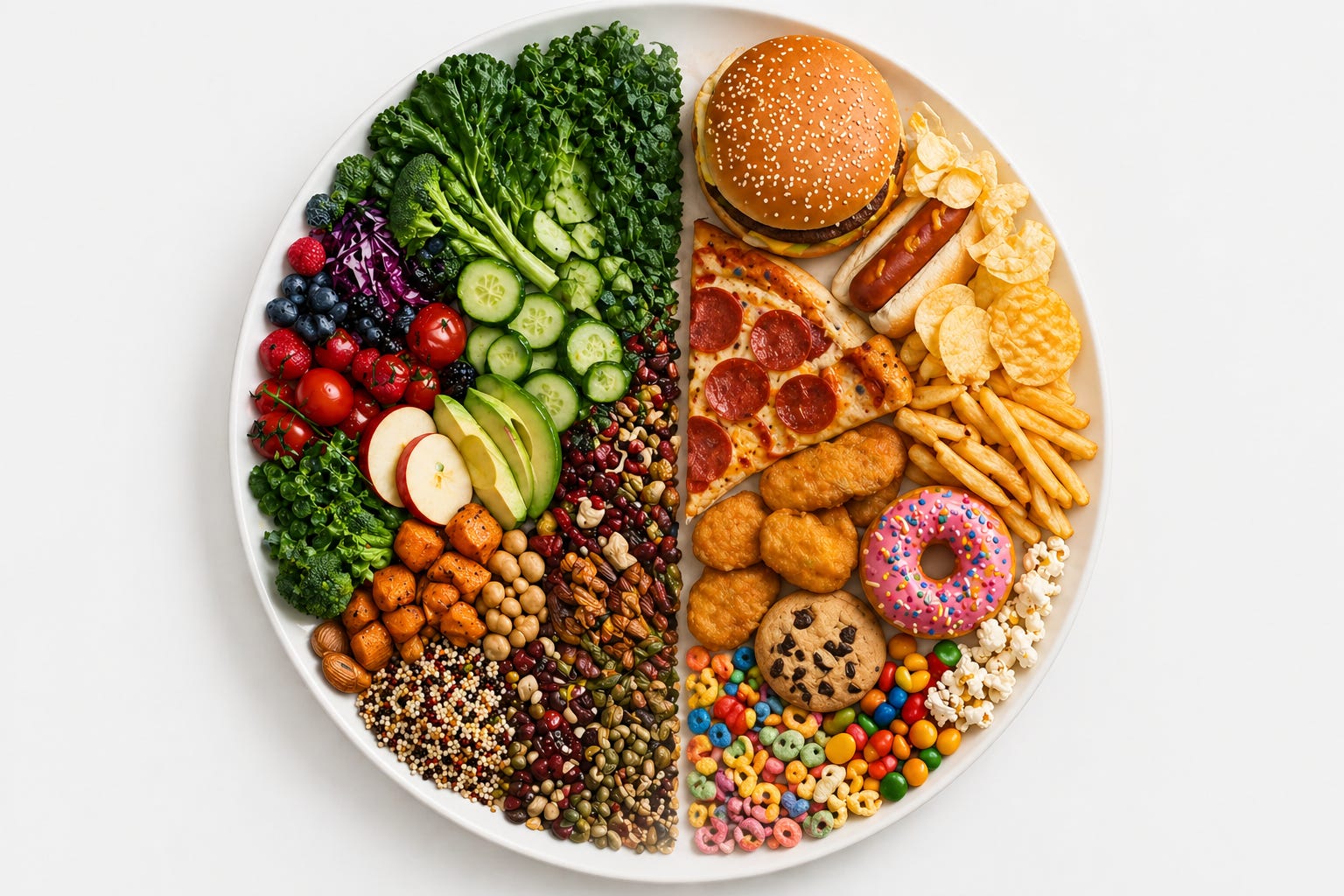
At the same time, two forces are converging. First, we are removing the inputs that sustain the microbiome, fiber and polyphenol-rich foods.
Second, we are increasing exposures that disrupt it, including ultra-processed foods, additives, and other environmental pressures. This creates a compounding effect.
It is not just that beneficial inputs are missing. It is that disruptive inputs are replacing them. A one-two punch: deprivation and disruption.
From Deficiency to Depletion
We are used to thinking about nutrition in terms of deficiency. But what we are seeing now is different.
This is not the absence of a single nutrient. It is the depletion of a system, a gradual erosion of microbial diversity, metabolic capacity, and functional redundancy.
And unlike classic deficiencies, the consequences are diffuse, including metabolic disease, immune dysregulation, and neurodegenerative diseases. No single cause and no single fix.
The microbiome challenges us to think differently. Not in terms of isolated nutrients, but relationships, and not in terms of single causes, but interacting systems.
Fiber and polyphenols are not just components of food. They are inputs into a larger network that converts diet into biological signals.
What we missed was not just the microbiome itself. We missed the importance of maintaining the system that makes nutrition work.
A Shift Forward
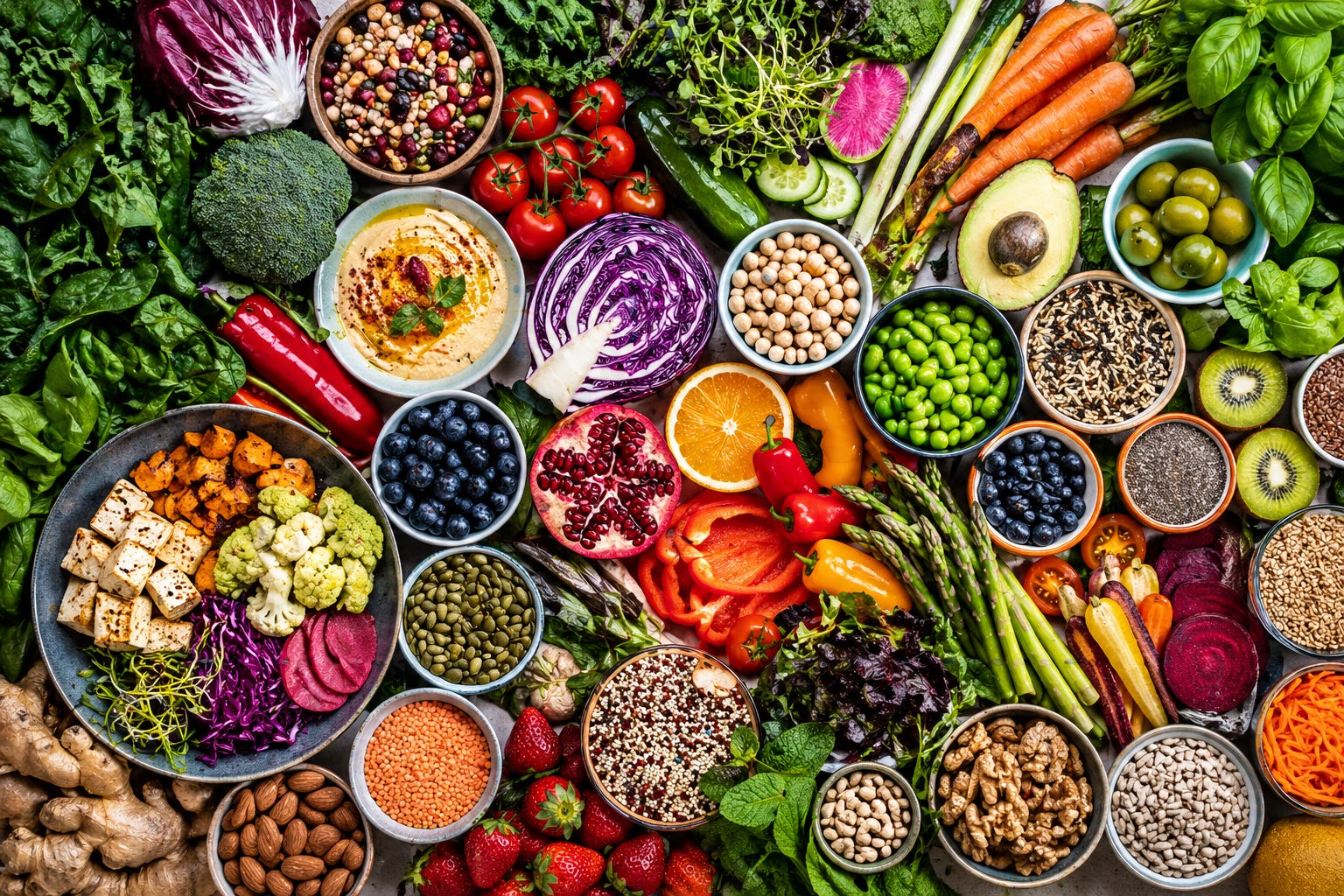
The solution is not to chase individual microbes or single compounds. It is to restore the conditions that allow the system to function.
This includes high quality, diverse, fiber-rich plant foods, polyphenol-rich dietary patterns, minimizing unnecessary disruption, and supporting early-life microbial development.
In other words, rebuilding redundancy. Because resilience is not created by precision alone, it is created by overlap, diversity, and balance.
The Takeaway
We did not miss the microbiome because it was too small. We missed it because it had built in back up.
Only now, as that resilience erodes, are we beginning to see what it was doing all along. And why it matters.
Christopher Damman, Associate Professor of Gastroenterology, School of Medicine, University of Washington. Editor-in-Chief of Gut Bites MD.