

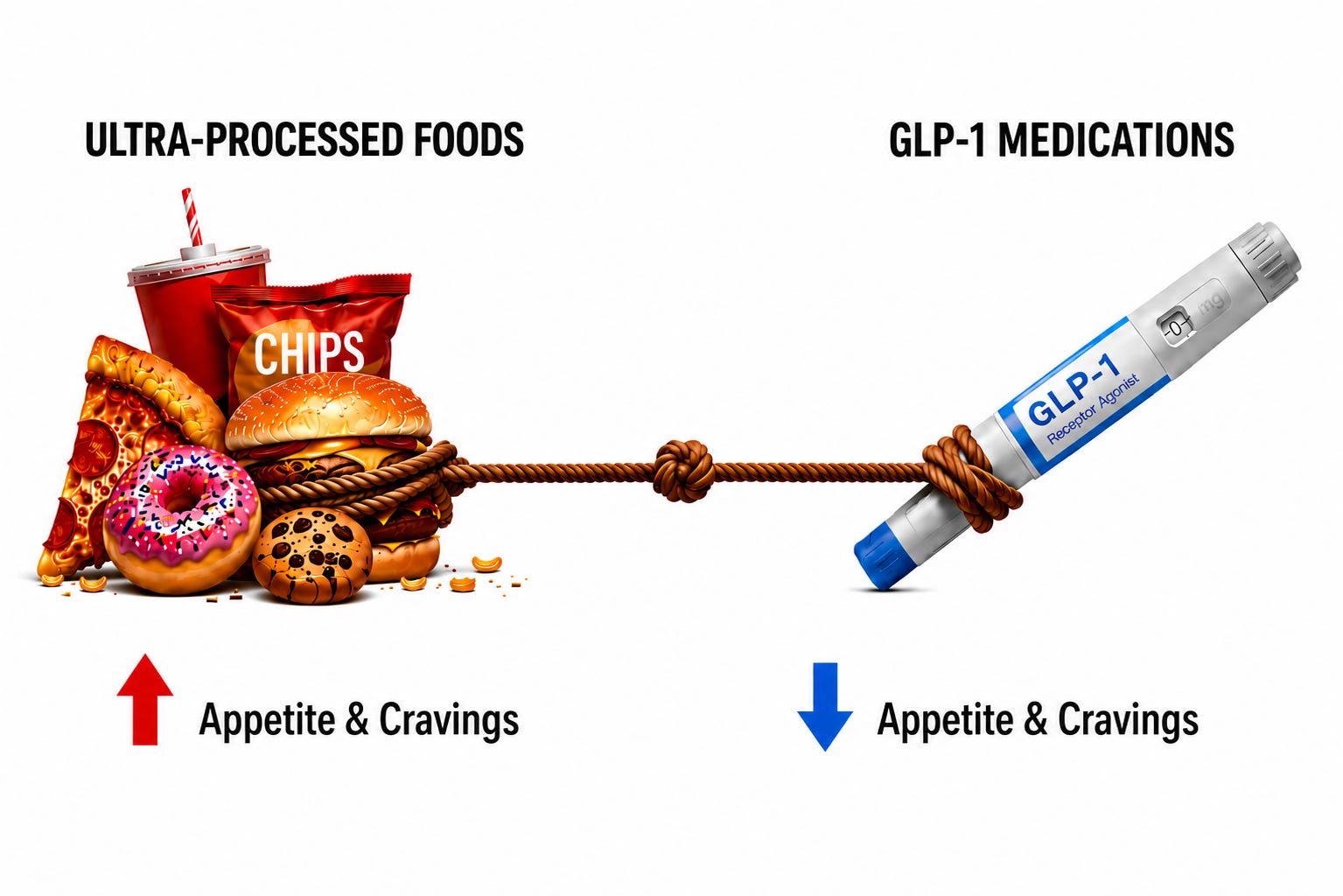
Christopher Damman, Associate Professor of Gastroenterology, School of Medicine, University of Washington. Editor-in-Chief of Gut Bites MD.
Walk through any grocery store and you’ll find yourself surrounded by some of the most sophisticated products ever created by modern industry. Not computers. Not smartphones. Food.
For most of human history, food existed within the constraints of nature. Plants contained fiber. Fruits contained polyphenols. Meals required effort to prepare and consume. Hunger and satiety evolved over millions of years as tightly regulated biological systems designed to help us survive. Today, many of those natural signals are increasingly being challenged by foods engineered not simply to nourish us, but to maximize consumption.
This isn’t a conspiracy. It’s economics. The primary responsibility of a publicly traded company is to sell products and generate returns for shareholders. Without strong social guardrails, the natural tendency of any competitive market is to optimize for what drives sales. In the food industry, that often means creating products that are highly palatable, convenient, inexpensive, and difficult to stop eating. The unintended consequence may be that we are increasingly living in an environment that works against many of the biological systems that once helped regulate appetite and metabolic health.
The Science of “More”
Food companies spend billions studying consumer behavior, sensory science, flavor chemistry, and reward pathways. The goal is simple: create products people want to buy again. One strategy is increasing what scientists call hyper-palatability—the combination of salt, sugar, fat, texture, aroma, and flavor that drives reward and encourages continued consumption.
Many ultra-processed foods contain:
Higher levels of salt
Refined carbohydrates that digest rapidly
Concentrated fats
Artificial or natural flavor systems designed to amplify taste
Textures engineered for maximum enjoyment
Long shelf life and convenience
At the same time, many contain substantially less of the components that naturally promote fullness and metabolic regulation:
Fermentable substrates that feed beneficial gut microbes
The result is often food that delivers a powerful reward signal without generating the same degree of satiety that traditionally accompanied eating. In other words, more pleasure per bite and less biological braking.
Many researchers believe this effect extends beyond the food itself. Fiber and polyphenols help nourish the gut microbiome, which in turn produces compounds that influence satiety hormones and metabolic health. As diets become increasingly dominated by ultra-processed foods, we may be losing not only the nutrients that support fullness, but also the microbial signals that help regulate appetite. In this way, some foods may be amplifying reward while simultaneously weakening the biological systems designed to tell us we’ve had enough.
When Biology Meets Industry
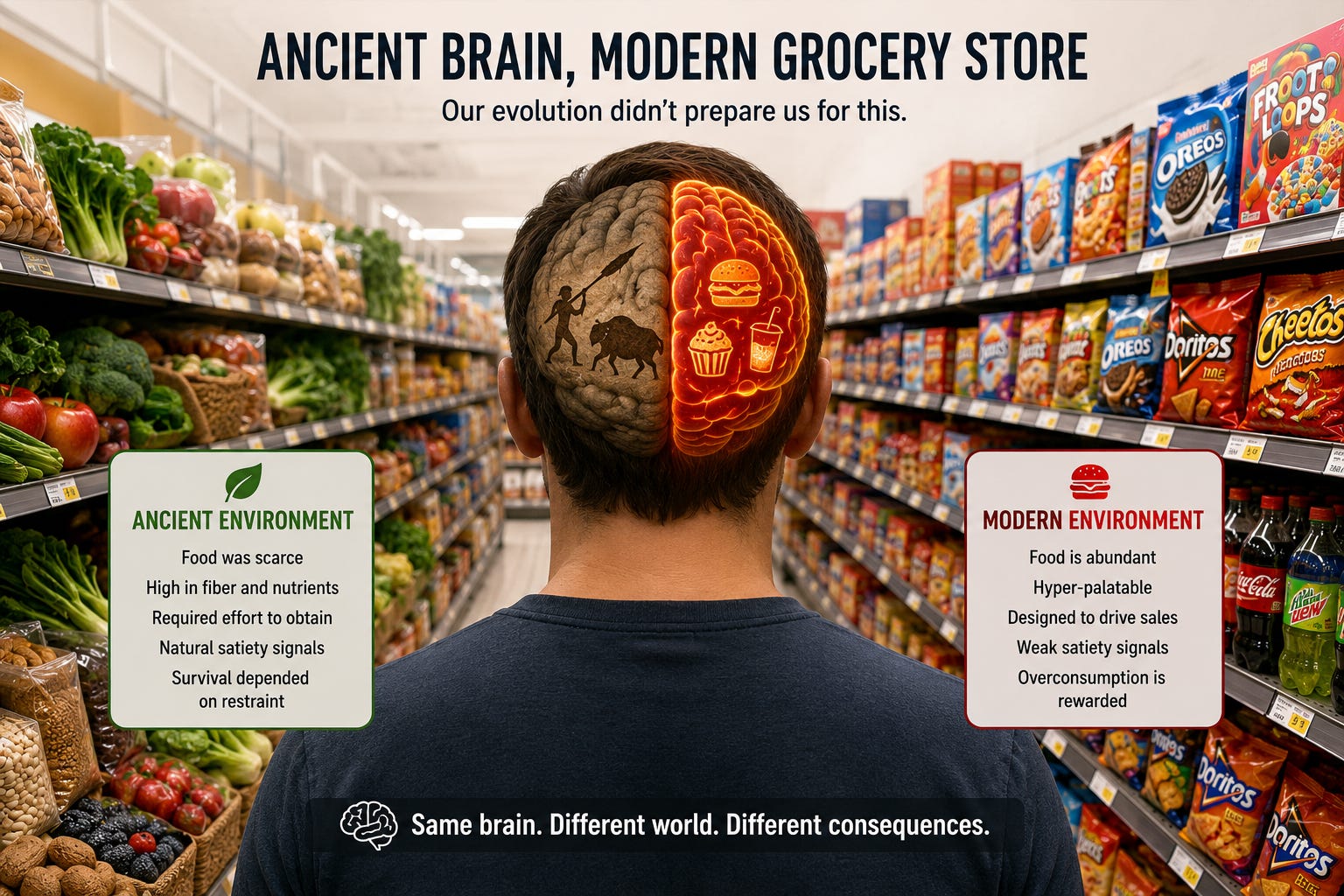
Humans evolved in environments where calories were scarce. Our brains developed reward systems that encouraged us to seek energy-dense foods when they were available, and this system worked remarkably well for most of human history.
Then modern food technology arrived.
Suddenly, foods capable of delivering intense reward signals became available 24 hours a day, 365 days a year. The reward system that once protected us from starvation now operates in an environment overflowing with engineered abundance. Viewed through this lens, the result is not a failure of willpower as much as a mismatch between ancient biology and modern incentives.
The Rise of Chronic Disease
Over the last several decades, societies around the world have experienced dramatic increases in:
Obesity
Type 2 diabetes
Fatty liver disease
Cardiovascular disease
Certain cancers
Autoimmune disorders
Neurodegenerative diseases such as Alzheimer’s disease
These conditions are complex and multifactorial, and no single factor explains their rise. However, few scientists would dispute that dietary patterns, sedentary lifestyles, poor sleep, chronic stress, environmental exposures, and increasing consumption of ultra-processed foods are important contributors.
Our modern environment often pushes biological systems away from equilibrium and toward chronic metabolic dysfunction. While the precise causes vary from disease to disease, many appear to share common roots in disrupted metabolism, chronic inflammation, and lifestyles increasingly disconnected from the conditions under which human physiology evolved.
Then Came the GLP-1 Revolution
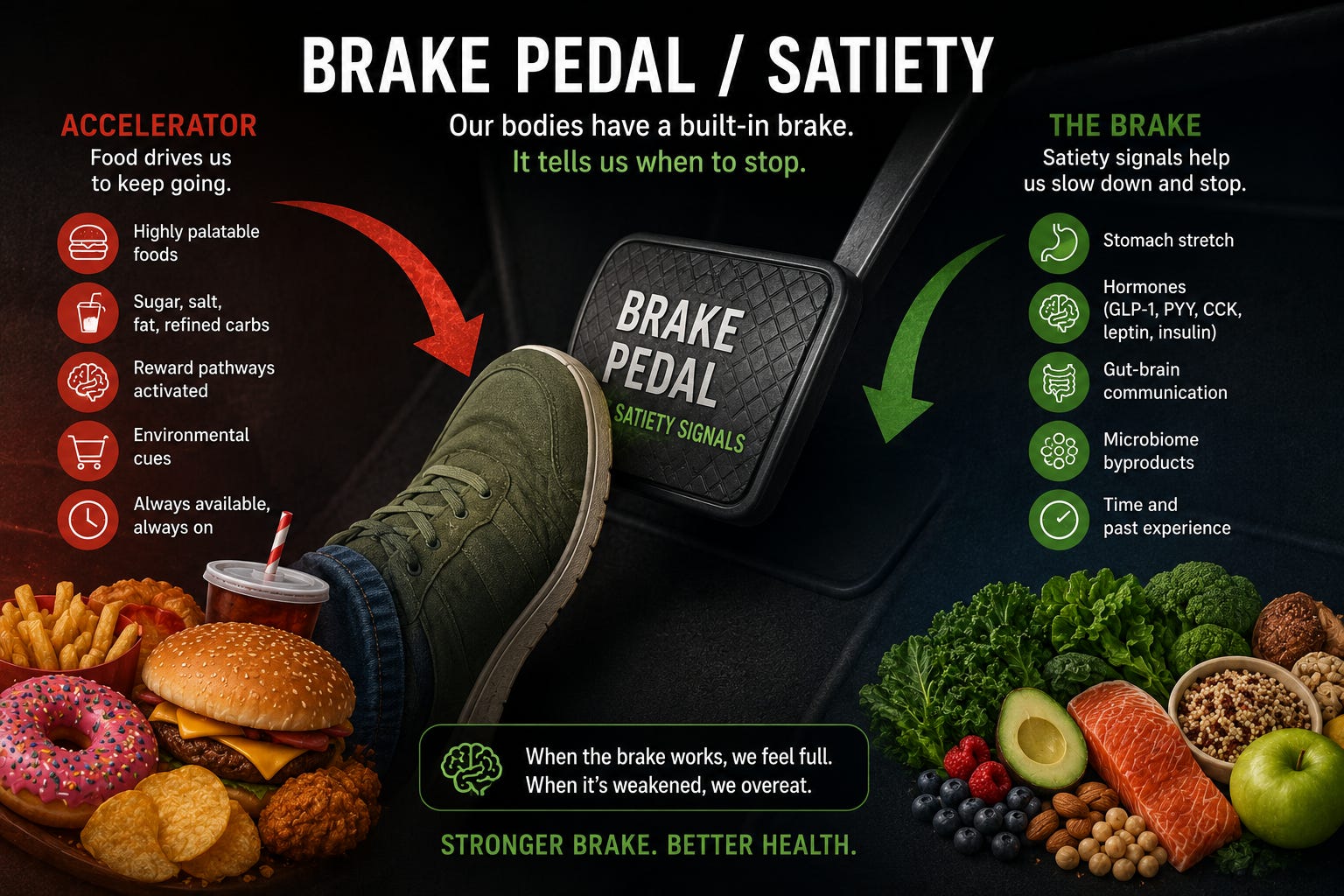
The most fascinating twist in this story may be the emergence of GLP-1 medications. Drugs such as semaglutide and tirzepatide have demonstrated unprecedented effectiveness for weight loss and metabolic disease, helping many individuals achieve results that were previously difficult to attain.
What do they do? At their core, they amplify signals related to satiety. In many ways, they help restore a message that modern food environments may have weakened:
“You’ve had enough.”
Patients frequently report:
Reduced hunger
Earlier fullness
Less food noise
Reduced cravings
Lower interest in highly rewarding foods
Some researchers and clinicians describe the experience as finally feeling in control around food. The irony is difficult to ignore. For decades, portions of the food industry invested enormous resources into making products that encouraged people to eat more. Now one of the most successful classes of drugs in history helps people want to eat less.
In some respects, GLP-1 medications can be viewed as an antidote to a food environment that has spent decades weakening natural satiety signals. While that comparison is imperfect, it highlights an extraordinary reality: one of the most powerful therapies for metabolic disease works by restoring fullness and reducing desire.
The Promise and Limitations of GLP-1 Drugs
These medications represent a major medical breakthrough. For many individuals, they reduce suffering, improve metabolic health, lower cardiovascular risk, and dramatically improve quality of life. They may ultimately prove beneficial for a range of conditions linked to metabolic dysfunction, including heart disease, neurodegenerative disease, and potentially even some cancers.
Yet they are not without tradeoffs.
Common side effects include:
Nausea
Constipation
Vomiting
Gastrointestinal discomfort
More serious complications can occur, including severe gastrointestinal slowing and, in rare cases, gastroparesis. Another concern is that rapid weight loss can include loss of lean muscle mass if individuals are not prioritizing resistance training and adequate protein intake. Nutrient deficiencies may also emerge when food intake drops substantially without attention to dietary quality.
Importantly, these medications help manage disease, but they do not fundamentally transform the food environment that contributed to the problem. They are powerful tools, but they do not address the root causes that continue to drive chronic disease throughout society.
A Deeper Question: What Happens to Desire?
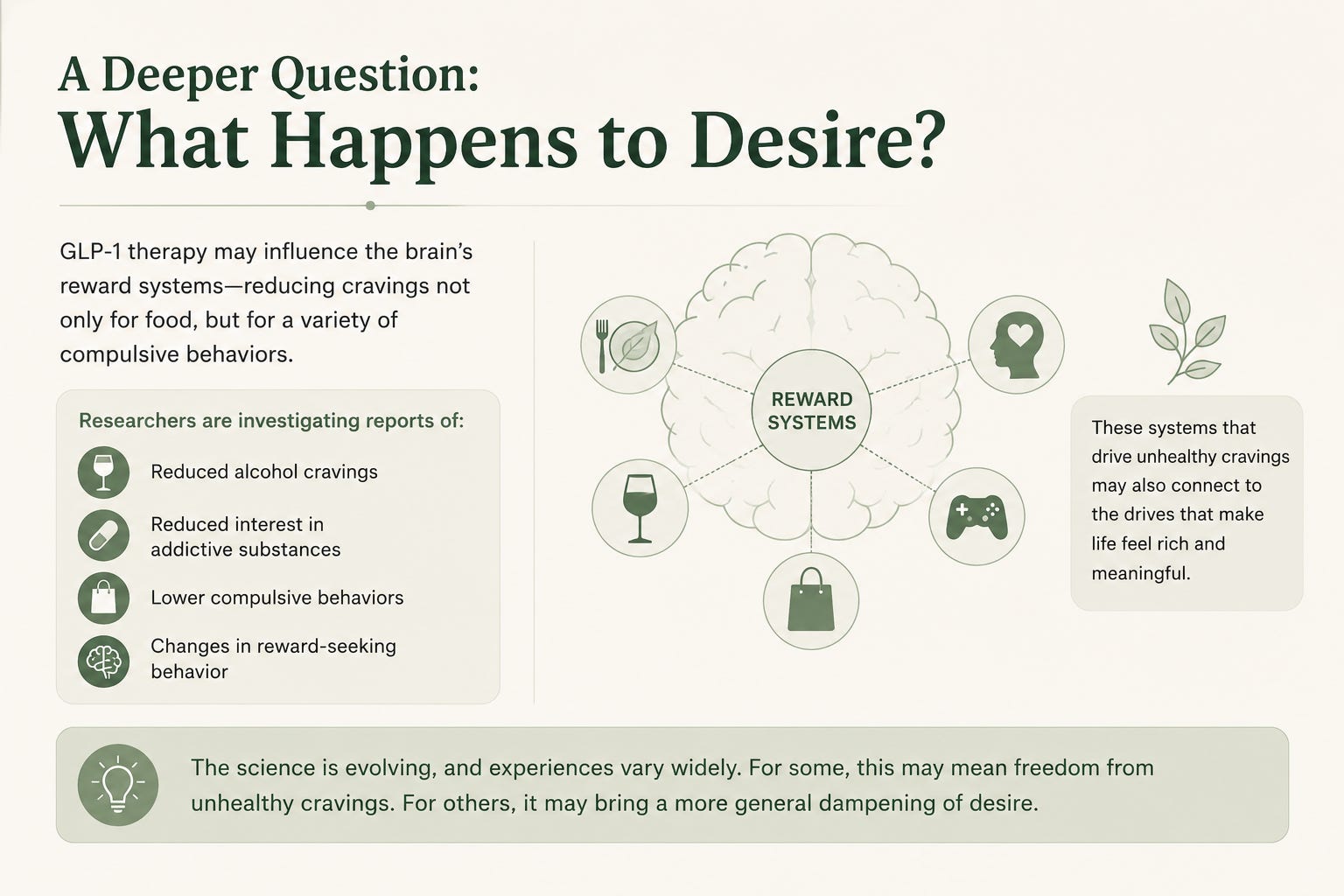
One of the most intriguing observations emerging from GLP-1 therapy is that some individuals report changes extending beyond food.
Researchers are investigating reports of:
Reduced alcohol cravings
Reduced interest in addictive substances
Lower compulsive behaviors
Changes in reward-seeking behavior
These findings are generating excitement because they may offer new approaches to treating addiction. By influencing fundamental reward systems in the brain, GLP-1 medications may help reduce cravings not only for food but for a variety of compulsive behaviors.
At the same time, some patients and their partners report something more complicated. Some describe a general dampening of desire—not just for unhealthy foods, but sometimes for other pleasures as well. Food feels less exciting. Alcohol becomes less appealing. Shopping impulses decline. Some individuals even report changes in sexual interest.
The science is still evolving, and experiences vary widely from person to person. But these observations raise fascinating questions about the relationship between appetite, reward, motivation, and meaning. The systems that drive unhealthy cravings may also be connected to some of the drives that make life feel rich and engaging.
The Real Goal Is Neither More Drugs Nor More Processed Food
The lesson is not that processed foods are evil. Nor is it that medications are bad. Both have delivered enormous benefits.
Food processing has improved food safety, affordability, preservation, and convenience. Modern pharmaceuticals have reduced suffering and extended millions of lives. The challenge arises when either becomes a substitute for addressing root causes.
A society built around hyper-palatable foods and sedentary lifestyles will inevitably require more medical intervention. A society focused on restoring metabolic health may reduce the need for those interventions in the first place.
The future should not be a battle between food and medicine. It should be a collaboration aimed at restoring human health.
A Better Alignment of Incentives
Money moves the world. Companies respond to incentives. Governments respond to incentives. Consumers respond to incentives.
The question is not whether profit exists. The question is whether profit can be aligned with long-term human flourishing. When healthier choices become the easier choices, the market adapts. When consumers demand better products, companies innovate. When policy rewards long-term health instead of short-term gains, systems evolve.
The challenge before us is not technological. It is cultural, economic, and political. We already know many of the levers that promote metabolic health:
Whole foods
Fiber-rich diets
Physical activity
Sleep
Stress management
Social connection
Reduced consumption of ultra-processed foods
The question is whether we are willing to build environments that make these choices easier.
What Could Be Done?
Governments
Incentivize production and affordability of minimally processed foods.
Improve front-of-package labeling transparency.
Fund independent nutrition and microbiome research.
Restrict marketing of hyper-palatable foods to children.
Design cities that encourage physical activity and active transportation.
Align healthcare reimbursement with prevention, not just treatment.
Support school nutrition programs focused on whole-food dietary patterns.
Food Companies
Increase fiber content in products without sacrificing accessibility.
Preserve beneficial plant compounds and polyphenols where possible.
Develop foods that promote satiety rather than maximizing overconsumption.
Invest in long-term health outcomes as a business metric.
Increase transparency around ingredients and formulation strategies.
Measure success not only by sales volume but by consumer health impact.
Healthcare Systems
Emphasize prevention alongside pharmaceutical treatment.
Pair GLP-1 therapies with nutrition, exercise, and behavioral support.
Promote resistance training and muscle preservation during weight loss.
Expand access to lifestyle medicine programs.
Educate patients about the root causes of metabolic disease.
Individuals
Prioritize whole and minimally processed foods when possible.
Increase dietary fiber through fruits, vegetables, legumes, nuts, and whole grains.
Consume a diverse range of colorful plant foods to support microbiome health.
Engage in regular resistance and aerobic exercise.
Protect sleep and stress management as pillars of metabolic health.
View medications as tools, not substitutes for foundational lifestyle habits.
Vote with purchasing decisions and support companies that prioritize long-term health.
The ultimate goal is not simply to live longer. It is to create a world in which our food, our biology, our economy, and our healthcare systems work together rather than against one another.
When we align those forces, we move closer to something medicine alone can never provide: a society that makes health the default rather than the exception.
Christopher Damman, Associate Professor of Gastroenterology, School of Medicine, University of Washington. Editor-in-Chief of Gut Bites MD.