

Christopher Damman, Associate Professor of Gastroenterology, School of Medicine, University of Washington. Editor-in-Chief of Gut Bites MD.
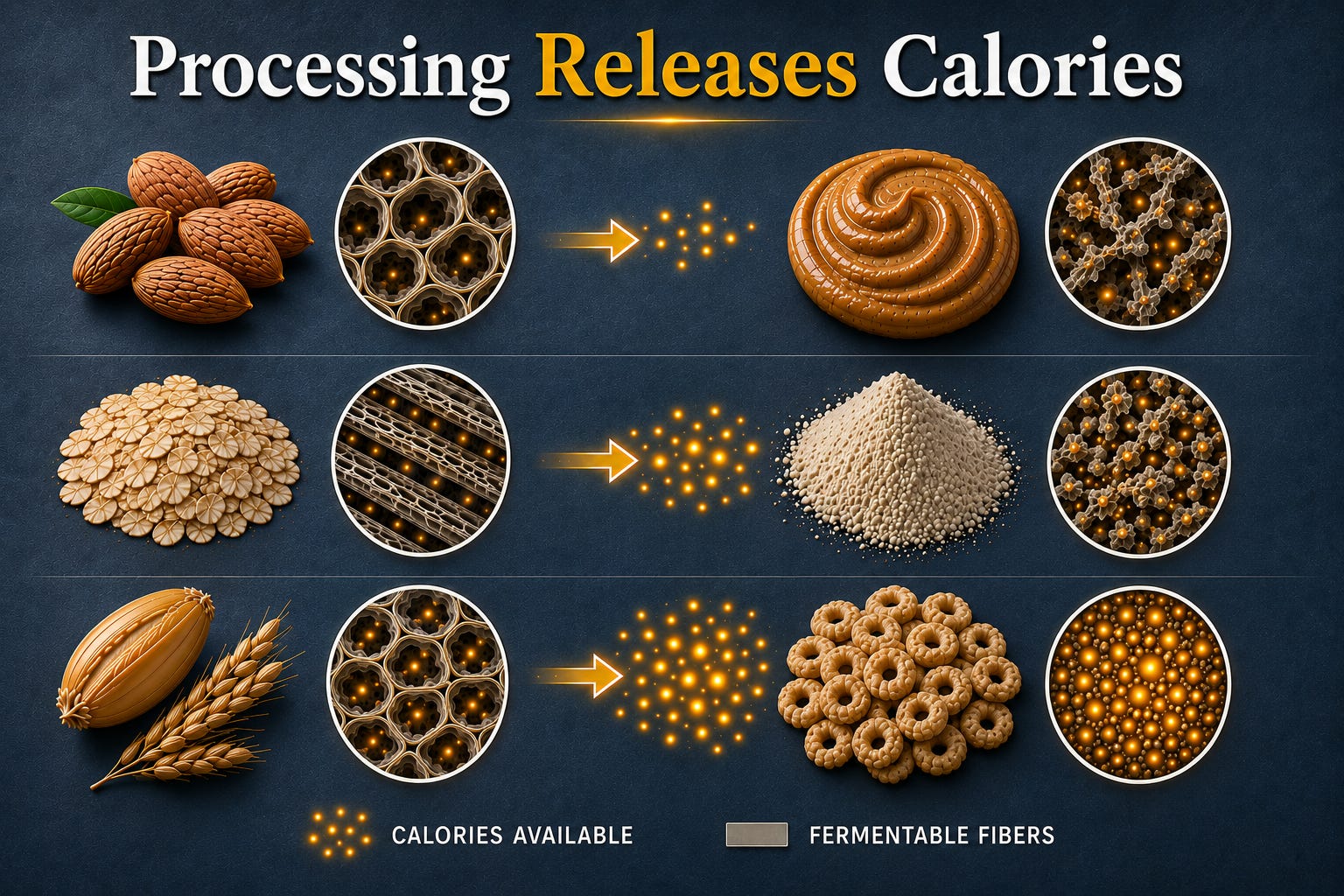
For decades, we’ve treated calories as if they are perfectly measurable units of energy. Eat 200 calories, absorb 200 calories. Simple. But biology is not that simple. In reality, the structure of food changes how many calories we actually absorb. Some foods deliver energy rapidly and efficiently, while others “hide” part of their calories inside cellular structures that our digestive enzymes are not able to fully break down. This is especially true for many whole plant foods, and it may help explain why whole foods and ultra-processed foods behave so differently in the body even when their calorie counts look similar on paper.
Plants are built differently than animal foods. Much of their energy is stored inside rigid cell walls made from fibers like cellulose, hemicellulose, and pectin. These structures protect nutrients from the gut environment and regulate how quickly they are released. Humans cannot fully break down many of these plant cell walls, meaning that some starches, fats, and other nutrients remain physically trapped during digestion. Instead of being absorbed in the small intestine, portions of these nutrients continue farther down the digestive tract into the colon, where gut microbes begin metabolizing them.
Whole Foods Feed More Than Just Us
Once these leftovers reach the colon, microbes take over. Some fibers and resistant starches are fermented into short-chain fatty acids like butyrate that help support the gut lining, immune system, metabolism, and mitochondrial function. Polyphenols that escape absorption can also be transformed by microbes into bioactive metabolites that may influence inflammation and cardiometabolic health throughout the body. And some energy simply exits the body as waste.
Whole foods are not inefficient. They are metabolically buffered. Part of their energy is slowed, shared with the microbiome, or never fully extracted at all. In many ways, whole foods evolved to distribute calories gradually rather than flood the body with rapidly absorbable energy.
What Almonds Reveal About Calories
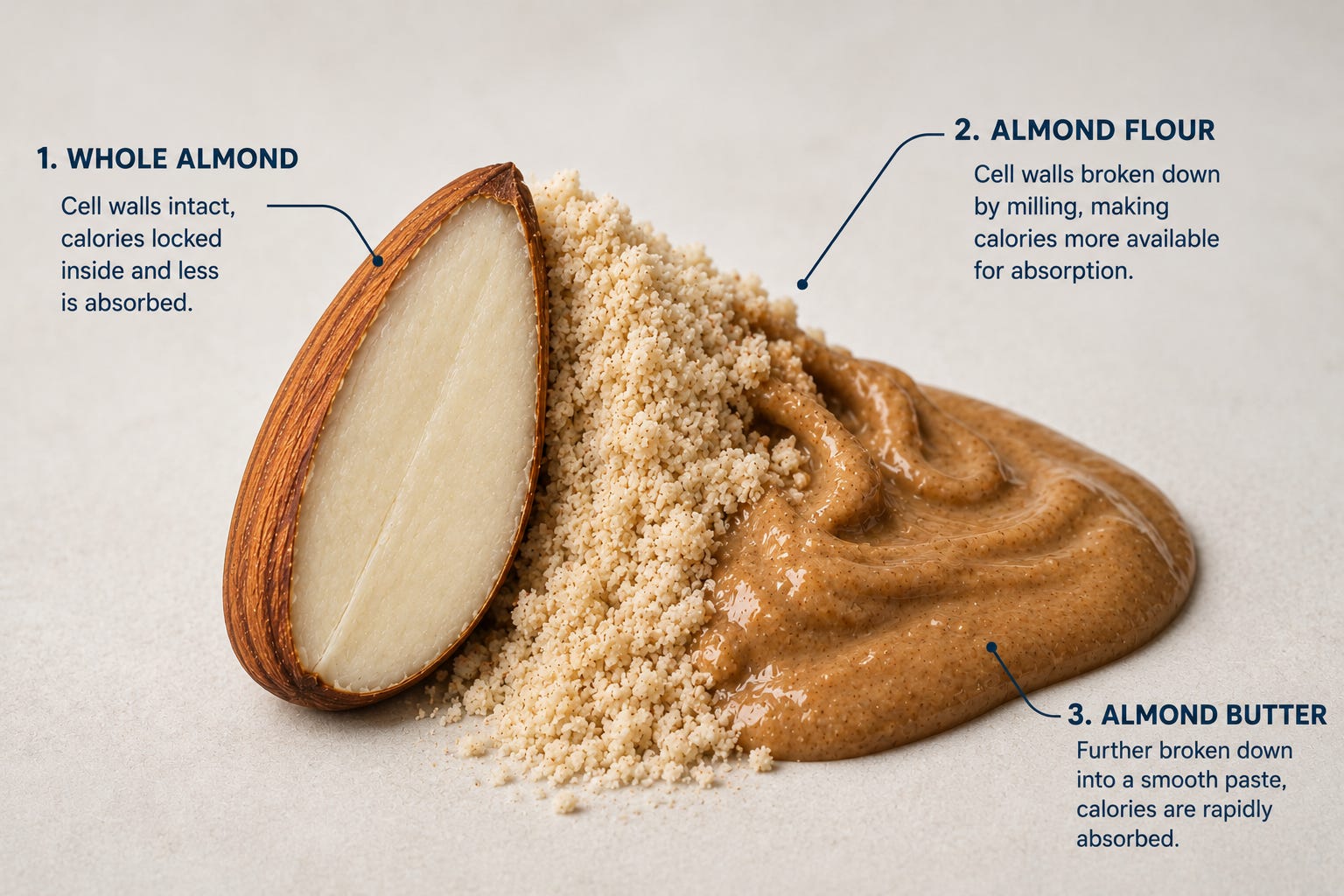
Almonds provide one of the clearest demonstrations that food structure matters. Studies consistently show that whole almonds deliver significantly fewer absorbable calories than predicted using standard calorie calculations. Depending on the preparation method, humans may absorb roughly 30% fewer calories from whole almonds than expected because much of the fat remains trapped inside intact plant cell walls.
One study found that a serving of whole almonds provided approximately 129 absorbable calories rather than the 170 calories predicted on nutrition labels using standard Atwater calculations — roughly 25% fewer absorbed calories. But processing changes this dramatically. Roasting, chopping, grinding into flour, or turning almonds into almond butter progressively disrupts cellular structures and exposes more fat to digestive enzymes. As a result, more calories become bioavailable. The calories were always present. Processing simply made them easier for the body to access.
Grains Behave The Same Way
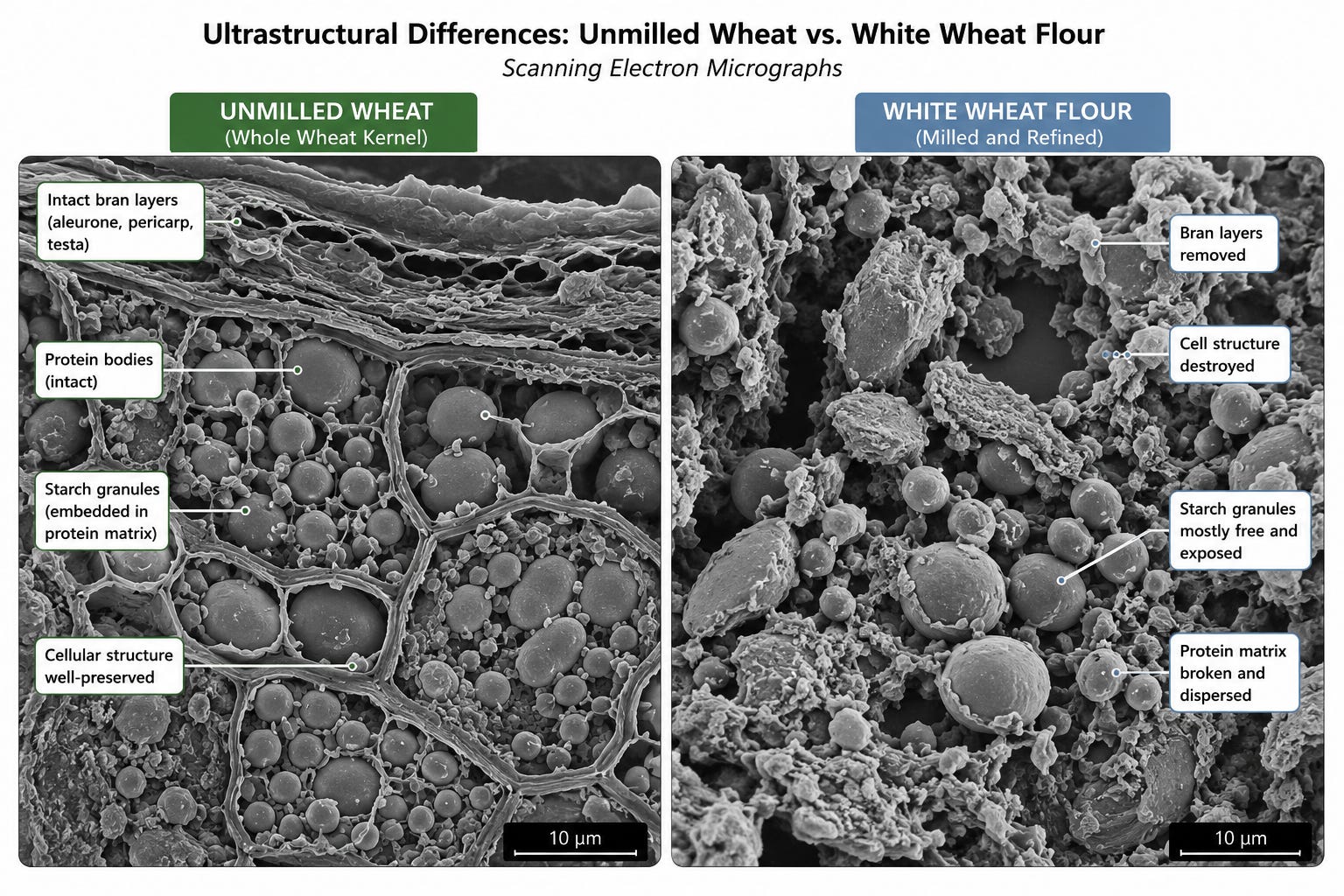
Grains show a remarkably similar pattern. Whole intact grains contain starch granules enclosed within fibrous plant structures that slow digestion and limit how rapidly enzymes can access carbohydrates. Milling grains into fine flour dramatically changes this relationship. Grinding increases surface area, disrupts cellular architecture, accelerates starch digestion, and increases caloric availability.
This helps explain why steel-cut oats, intact barley, or minimally processed kernels tend to produce slower glucose responses and greater fullness than finely milled flours made from the exact same grain. Even particle size matters. The smaller and more disrupted the food structure becomes, the easier it is for the body to rapidly extract calories. A whole kernel of wheat and finely milled white flour may originate from the same plant, but metabolically they behave very differently.
Humans Evolved Through Processing
Ironically, processing itself is not unnatural. Humans have been processing food throughout nearly all of evolutionary history. Cooking with fire may have been one of the most important metabolic innovations our species ever developed. Heat softens fibers, denatures proteins, gelatinizes starches, and breaks down cellular structures, dramatically increasing caloric availability. Without cooking, humans likely could not have supported our large energy-demanding brains.
Grinding grains into flour represented another major leap in energy extraction. Fermentation partially breaks down fibers and proteins while improving preservation at the same time. Churning milk into butter, fermenting dairy into yogurt, pressing olives into oil, soaking legumes, and nixtamalizing corn are all forms of processing that helped humans obtain more usable energy and nutrients from food. In many ways, processing helped humans survive scarcity.
Modern Ultra-Processing Changed The Equation
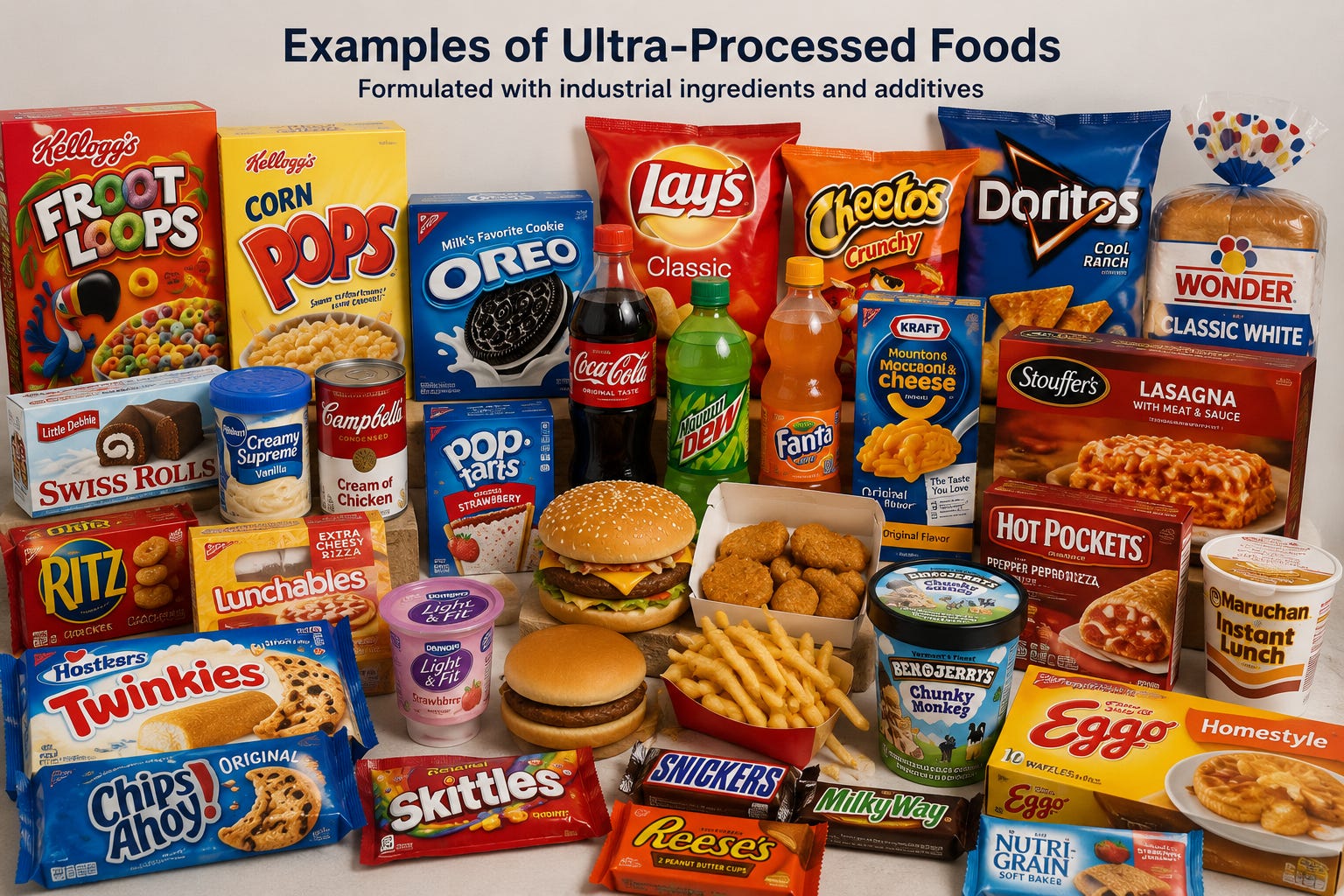
The problem is that modern food systems no longer operate in a world defined by scarcity. Modern ultra-processing goes far beyond traditional cooking or fermentation. Instead of gently modifying whole foods, many ultra-processed foods break ingredients down into highly purified components such as starches, sugars, refined oils, protein isolates, flavor compounds, emulsifiers, electrolytes, and added vitamins. These ingredients are then recombined into foods engineered for shelf stability, convenience, hyper-palatability, and low manufacturing cost.
The result is food that is extraordinarily easy to digest and absorb. The cellular structures are largely gone. The natural slowing mechanisms are reduced. Calories become rapidly bioavailable. For each calorie consumed, the body may extract and absorb a greater percentage of usable energy compared with intact whole foods.
Fiber And Polyphenols Are More Than “Extras”
At the same time, many of the non-nutritive compounds that normally accompany those calories are diminished. For years, nutrition science focused heavily on macronutrients: fat, carbohydrate, and protein considering the other compounds in plants anti-nutrients. But foods contain another layer of biology that may be just as important.
Fiber helps regulate how quickly nutrients are absorbed, alters satiety hormones, slows gastric emptying, feeds microbes, and changes how food moves through the intestine. Polyphenols interact with gut microbes, inflammation, mitochondrial signaling, and metabolic pathways throughout the body. These compounds are not simply passive passengers inside plants. They help regulate the metabolic response to the calories packaged alongside them. In many ways, they act like metabolic instructions.
The Problem Isn’t Processing — It’s Imbalance
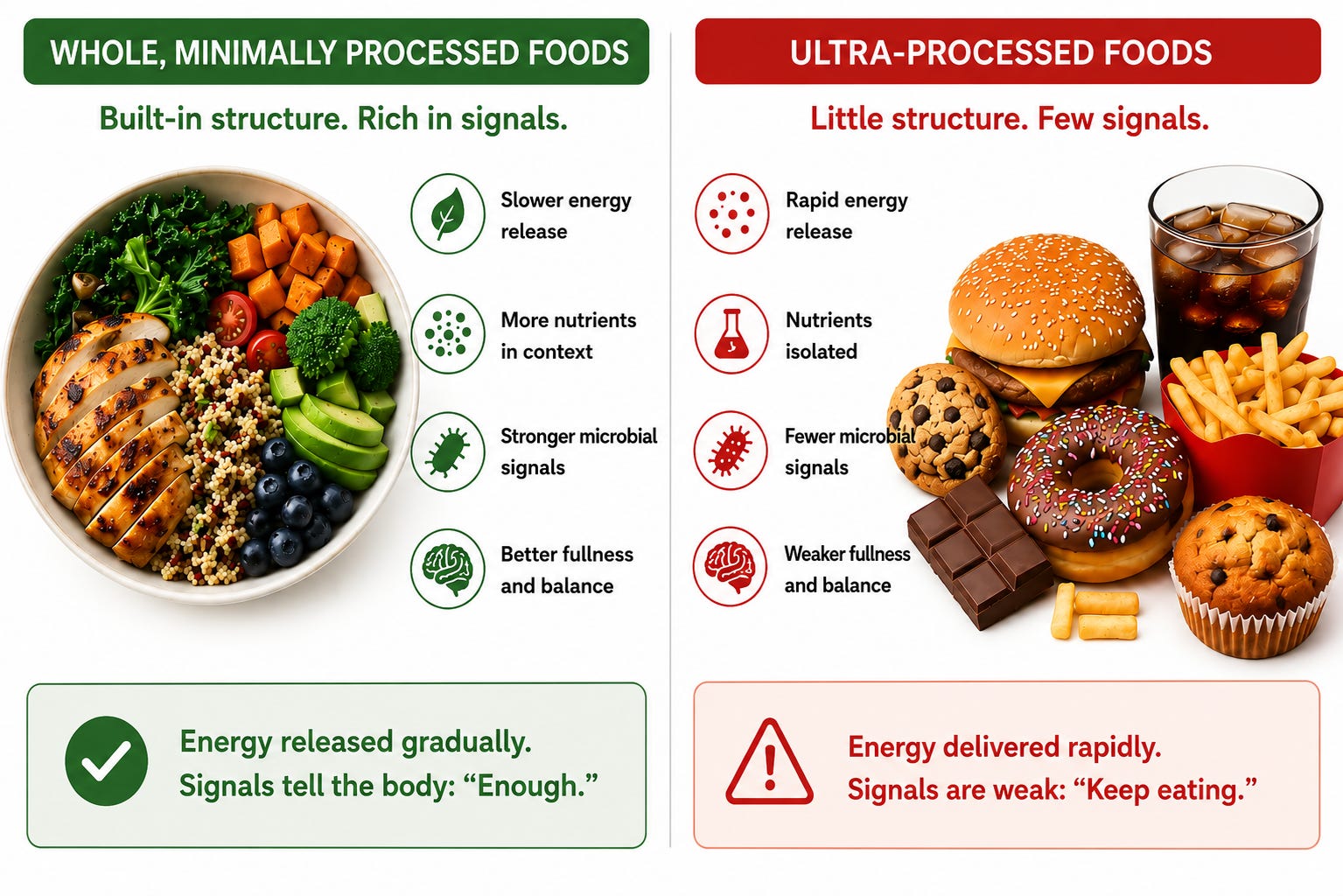
Ultra-processed foods often preserve the calories while stripping away much of the structural and signaling system that once balanced them. The result is food that delivers energy rapidly but often with fewer of the microbial and metabolic signals that help regulate appetite, fullness, and energy handling.
Importantly, this does not mean processing itself is bad. Without processing, humanity may never have survived. Cooking, grinding, fermenting, preserving, and culturing foods helped build civilization, and many traditional forms of processing remain incredibly beneficial today. Fermentation, for example, not only preserves food but also creates bioactive compounds and partially breaks down fibers and proteins in ways that may support metabolic health.
Maybe The Future Is Smarter Processing
The real issue is degree. Modern food engineering became exceptionally good at palatability and maximizing calories while paying far less attention to preserving the structural and microbial context food evolved within. Calories are now easier to absorb than ever before, while many foods contain fewer of the fibers, polyphenols, and intact structures that once slowed absorption and communicated with our microbiome.
The answer may not be eliminating processing altogether. It may be rediscovering older forms of processing that work with human health rather than against it — fermentation, intact grains, minimally refined foods, preservation of fiber structures, and polyphenol-rich ingredients — while designing future foods that restore the signals modern processing removed. Because the healthiest foods may not simply be the ones with the fewest calories. They may be the ones that deliver calories at the right speed, in the right structure, with the right instructions attached.
Christopher Damman, Associate Professor of Gastroenterology, School of Medicine, University of Washington. Editor-in-Chief of Gut Bites MD.